The citizen reporting network
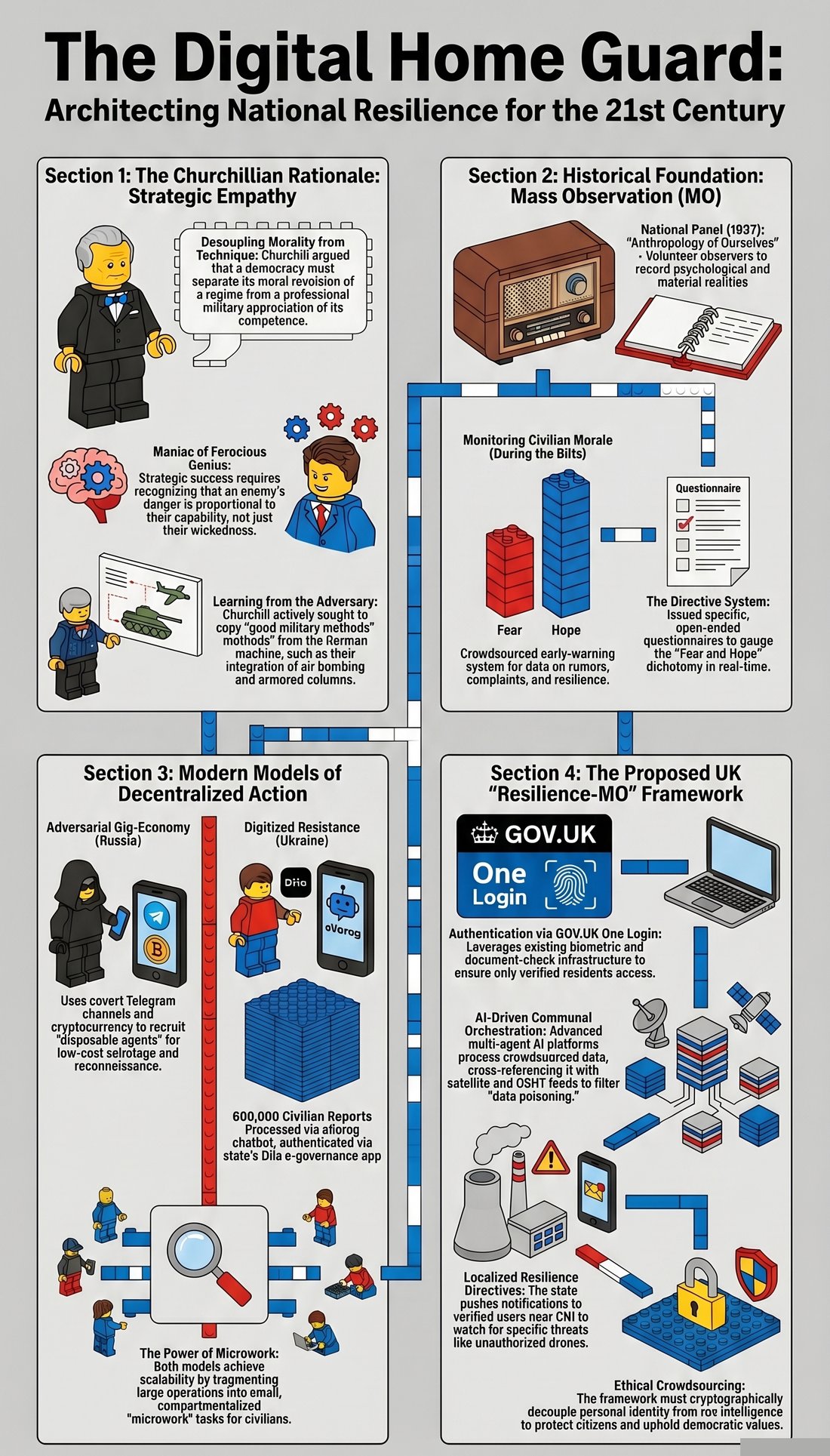
Mass Observation turned everyday life into a reporting surface. Volunteers wrote diaries and answered open-ended directives; investigators also observed pubs, shelters, workplaces, and streets. During the war, these streams helped the state read morale beyond official slogans.
Civilian diaries
Ordinary observers documented domestic routines, fear, class tensions, hope, fatigue, and overheard opinion across the Home Front.
Directives
Open questions focused the network on particular anxieties, rumours, reactions to events, and expectations for the post-war future.
Covert observation
Fieldworkers captured behaviour in public and industrial settings, revealing frictions that official morale language could miss.
From the research table on Britain by Mass-Observation. Used here as a compact statement of the project ethos.
Research table citing Ministry of Morale and the Director of Home Intelligence on the people-to-government channel.
"What are your main personal fears now?"
October 1942 directive excerpt showing the formal collection of emotion, anxiety, and future-facing hope.
Four decentralized models
The exhibit compares systems by architecture rather than moral equivalence. Mass Observation, hostile gig-economy sabotage, Ukrainian citizen reporting, and a proposed UK model all use dispersed civilian nodes, but their objectives, authentication, incentives, and governance differ sharply.
A democratic resilience loop
The research argues for a Churchillian separation of moral judgement from technical analysis: study the mechanism, reject the malice. A future UK system would invert hostile network logic into verified, lawful, citizen-assisted resilience.
Verified civic access
The proposed system begins with identity assurance, such as GOV.UK One Login, so a resilience network is harder to flood with bots, foreign operators, or fabricated local reports.
- Consent Opt-in participation and clear boundaries for civic reporting.
- Proportionality Localized directives only where crisis context justifies them.
- Human control AI triage supports analysts; it does not become command authority.
- Auditability Logs, redress, and independent oversight against misuse.